Drop and Merge Games
How it works
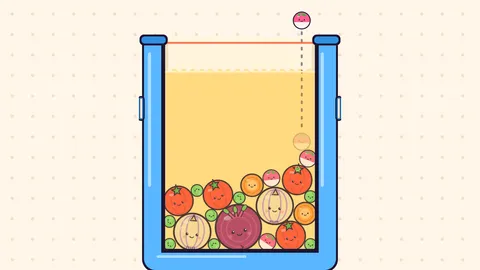
In a drop and merge game you release objects into a container from above, one at a time. When two identical objects touch, they combine into a single larger object, one step further along a fixed chain. Bigger objects take up more room, so the container slowly fills. The round ends when the pile rises past a limit line near the top.
Most games in the genre use real physics. Objects roll, bounce and push each other around, so the result of a drop is never fully predictable. A small piece might slip into a gap and land right on its twin, or wedge somewhere awkward and stay there for the rest of the game. Scoring usually rewards merges, with steps further along the chain worth more.
What makes a good one
- A chain that is easy to remember, with sizes that clearly step up.
- Physics that behaves consistently, so skill matters more than luck.
- A visible limit line and a short grace period before the game ends.
- Satisfying chain reactions, where one merge nudges two more pieces together.
Strategies that help
Build big at the bottom. Keep your largest pieces low and toward one side. A tidy gradient from large to small makes neighbors far more likely to match.
Drop next to a match. Small pieces that land on top of something much bigger tend to get stranded up there.
Let things settle. Dropping into a pile that is still moving makes the outcome harder to read.
Don’t fear the line. Near the top, a single merge can shrink the pile a lot. Look for the merge that frees the most space before you panic.
Our take
Soup Drop puts the genre in a cooking pot. You drop vegetables in, matching ones merge from tiny peas up through radishes, carrots and cabbages to a giant pumpkin, and when the pot finally overflows, Grandma tastes the soup and rates it. It is coming soon.