Mahjong Solitaire
How it works
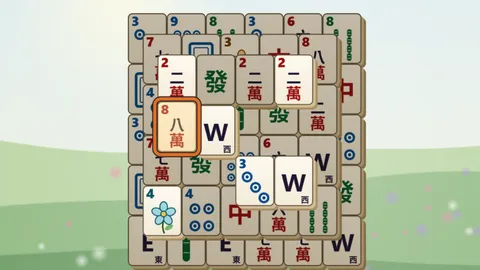
Mahjong solitaire uses the tiles of the classic Chinese game, but it is a puzzle for one. The tiles are stacked in a layout, often several layers deep. You remove them two at a time by matching identical tiles. Only free tiles can be matched: a tile is free when nothing sits on top of it and it has an open side to the left or to the right. Clear every tile and the board is solved.
The tile set has suits of dots, bamboo and characters numbered one to nine, plus winds and dragons. The flowers and the seasons are special: any flower matches any other flower, and any season matches any other season.
What makes a good one
- Every deal can be solved, so a loss is never the deal’s fault.
- Tiles big and clear enough to tell apart at a glance, with blocked tiles easy to spot.
- Free undo, so one wrong pair doesn’t cost the whole board.
- A shuffle for when no moves are left, and no pressure from a clock.
Strategies that help
Free the long rows. Tiles at the ends of long rows unlock the most new tiles, so clear the rows from the outside in.
Open the tall stacks early. Tiles under a high stack stay blocked until you dig down, so work on the top layers first.
Count before you match. When three of a tile are free, think about which two to take: the one you leave should not be the one blocking another pair.
Use undo to explore. If a match leads nowhere, step back and try the other pair.
Our take
Mahjong Moodboard is our mahjong solitaire. Every board is solvable, the tiles are large and easy to read, undo and hints are free, and every mood board you finish pins a calm themed mood to your moodboard. There is a new daily board too, the same for everyone.